
Technology
Technology is not a discipline. It is part of the world.
Digital technology is now part of almost every area of life: medicine, science, industry, finance, media and business.
That is why we want more than just future programmers to understand it.
We will teach you to use technology effectively, safely and ethically – and, above all, to understand what it can do, how it works and how it changes the world around us. Whether you become a doctor, scientist, entrepreneur or security analyst.
Technology is not confined to a single subject at ITG. We connect it with mathematics, social sciences, law, media, and physical and mental health.
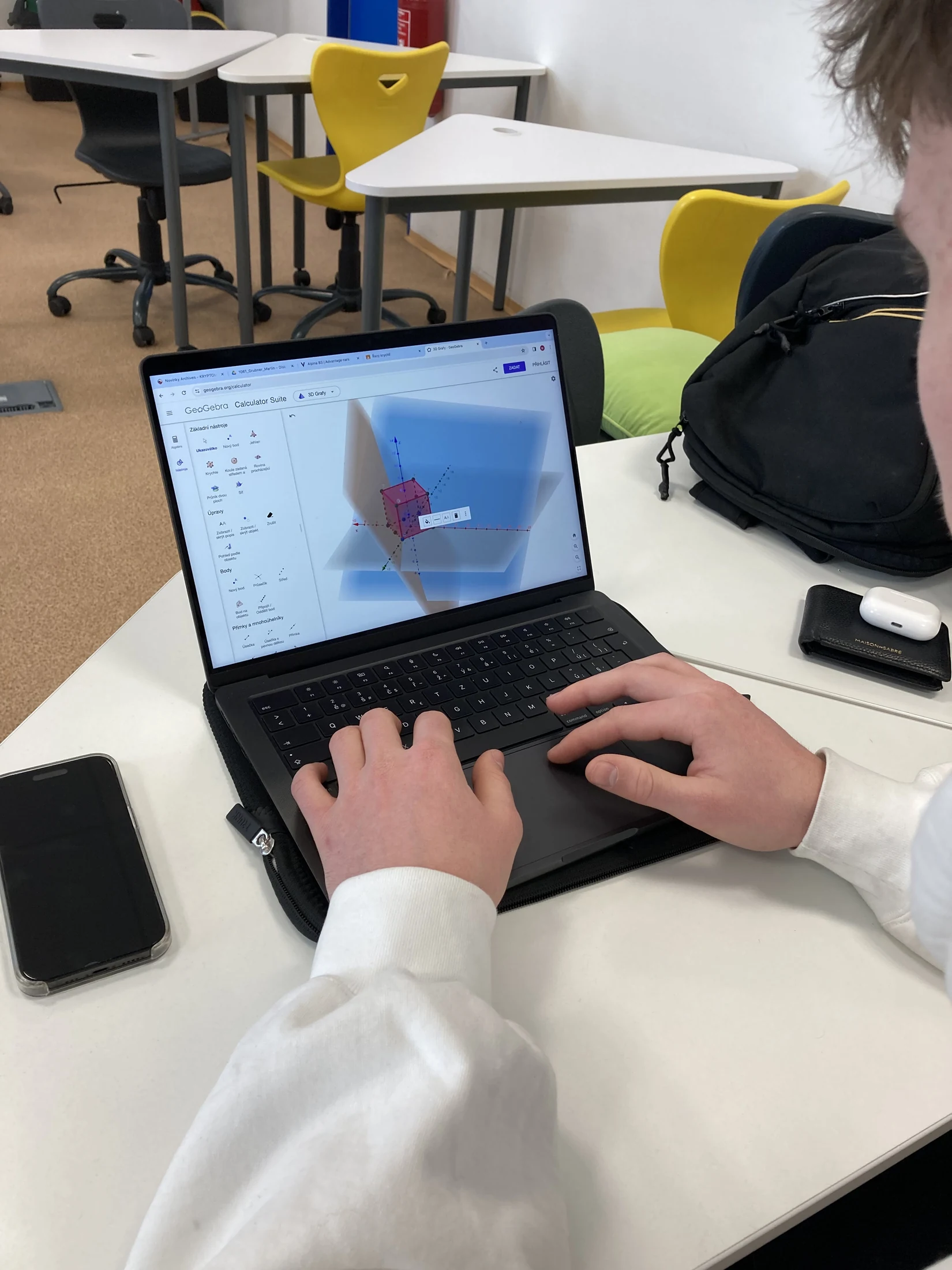
Photo placeholder
Students working with technology
Every ITG student takes BASE.
Our aim is not to turn everyone into a developer. We want every graduate to use technology confidently, understand its basic principles, work with data, and critically assess its possibilities and risks.
PROGRAMMING & ALGORITHMIC THINKING
The basics of Python and JavaScript, algorithms, debugging and the principles behind software.
DATA & DIGITAL TOOLS
SQL and relational databases, CSV, JSON and other data formats; working with tabular data, cleaning, analysing and visualising it.
WEB & INTERNET
HTML, CSS, JavaScript basics, HTTP, DNS, APIs and REST. Going beyond using the web to understand what happens beneath the surface.
SOFTWARE DEVELOPMENT
Git and GitHub, testing, UX/UI, the development cycle, team roles, agile approaches, and open source versus commercial software.
AI & FUTURE TECHNOLOGIES
How AI and machine learning work, generative AI, and the possibilities, limitations, risks and ethical use of AI tools.
SECURITY & THE DIGITAL WORLD
Digital footprints, privacy, cybersecurity, social media, disinformation, the cloud, licensing, GDPR and the wider legal and social context of technology.
Much of the teaching in the first two years is practical: students program in Python, work with data and SQL, use Git and GitHub, create websites with HTML, CSS and JavaScript, work with REST APIs and learn to test software.
Real projects are part of the course, alongside theory.
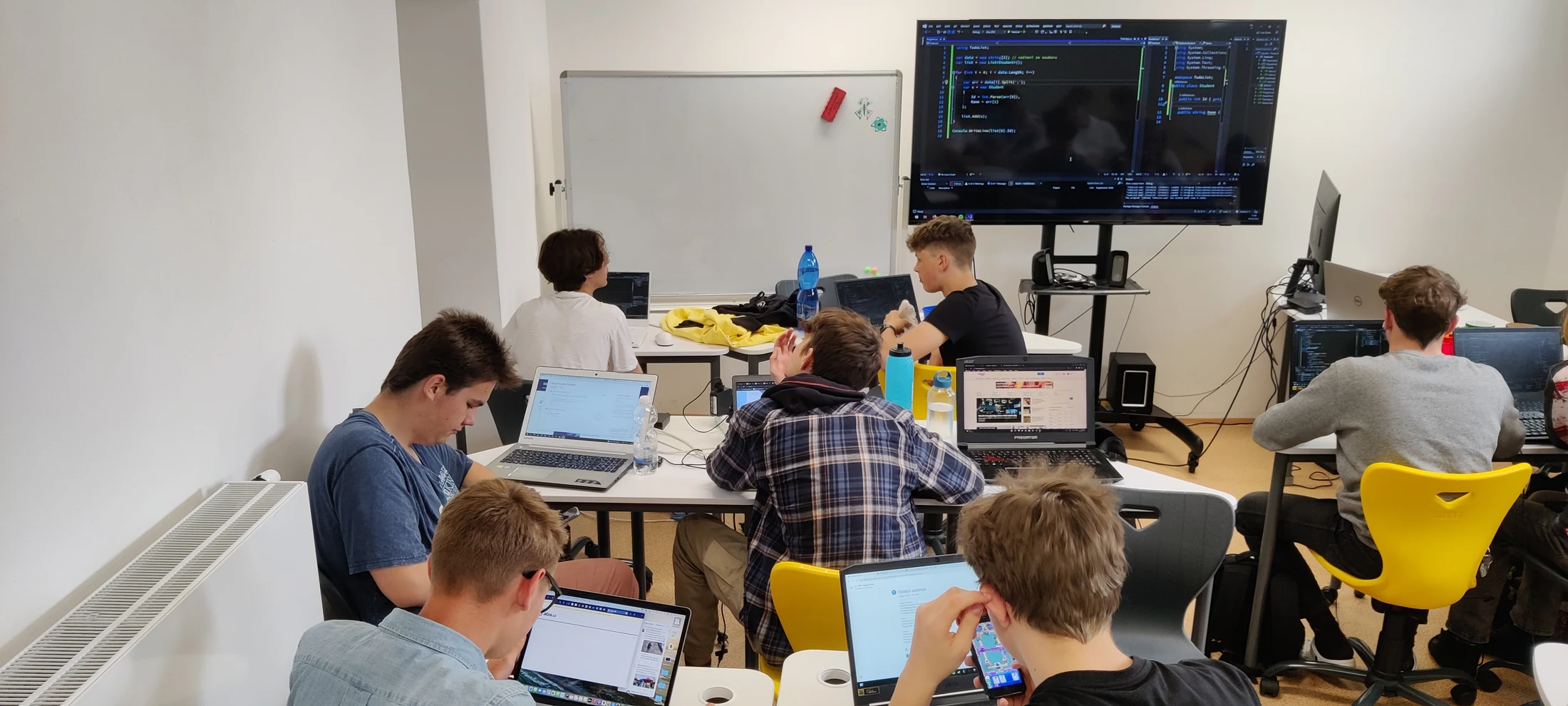
Photo placeholder
Programming and working with data

Photo placeholder
Working in pairs or teams

Photo placeholder
A student project and testing
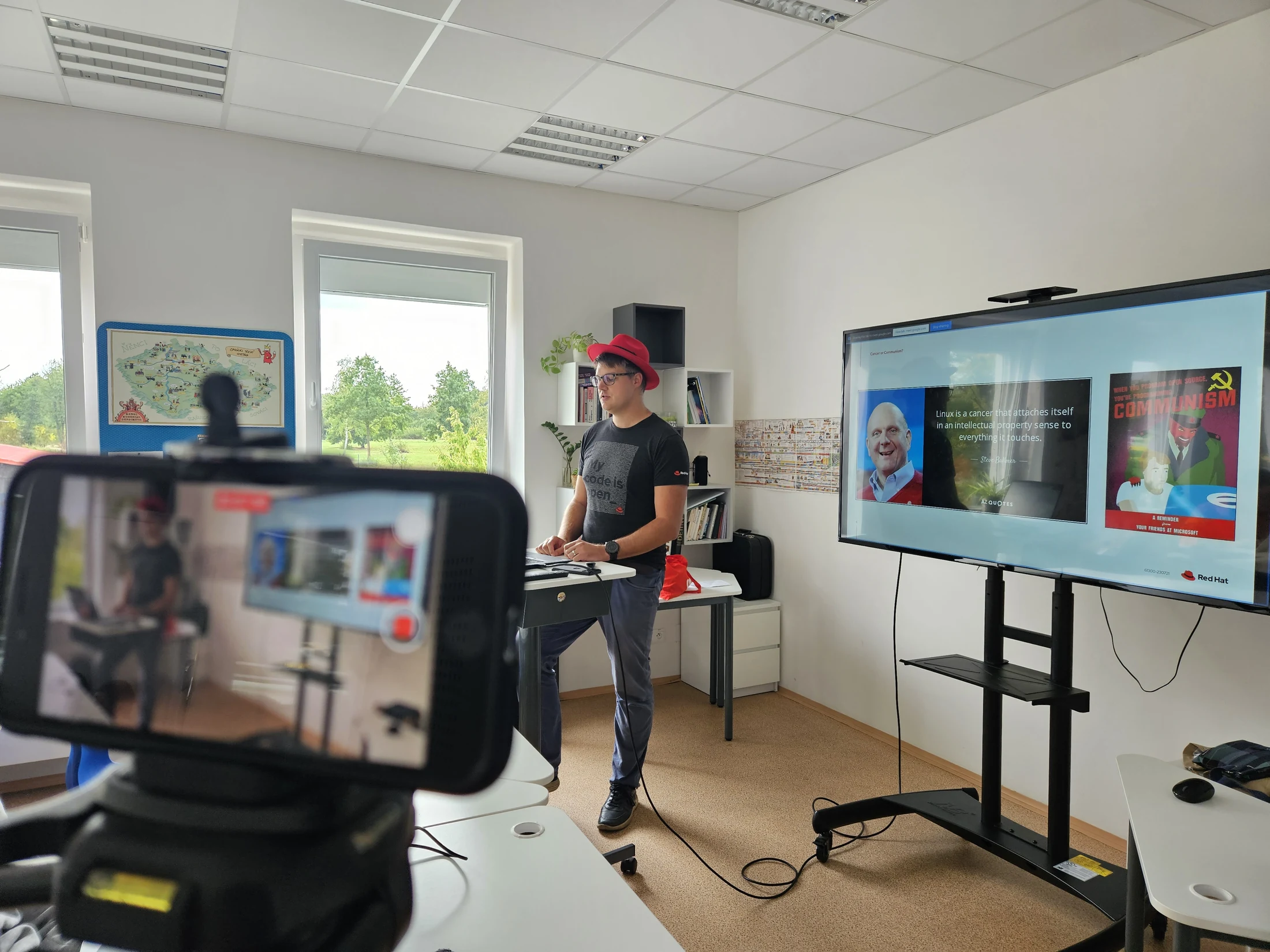
Photo placeholder
A student presenting and defending a project
Technology changes too quickly for learning a few specific programs to be enough.
We aim to go a level deeper: understand the principles, learn a new tool, evaluate its benefits and risks, and adapt to whatever comes next.
We apply the same principle to the Digital Competences graduation exam. Being able to talk about IT is not enough. Practical assessments use real tasks: working with an API, a database and Git, testing an application, carrying out a UX audit, or analysing a digital footprint and security risks.
From their third year, students choose the direction they want their studies to take.
If you love technology and are considering a technical or IT path, you can build a strongly technical course of study from the ADVANCED options. Every student chooses six ADVANCED subjects in years 3 and 4, but they do not all have to be technology subjects.
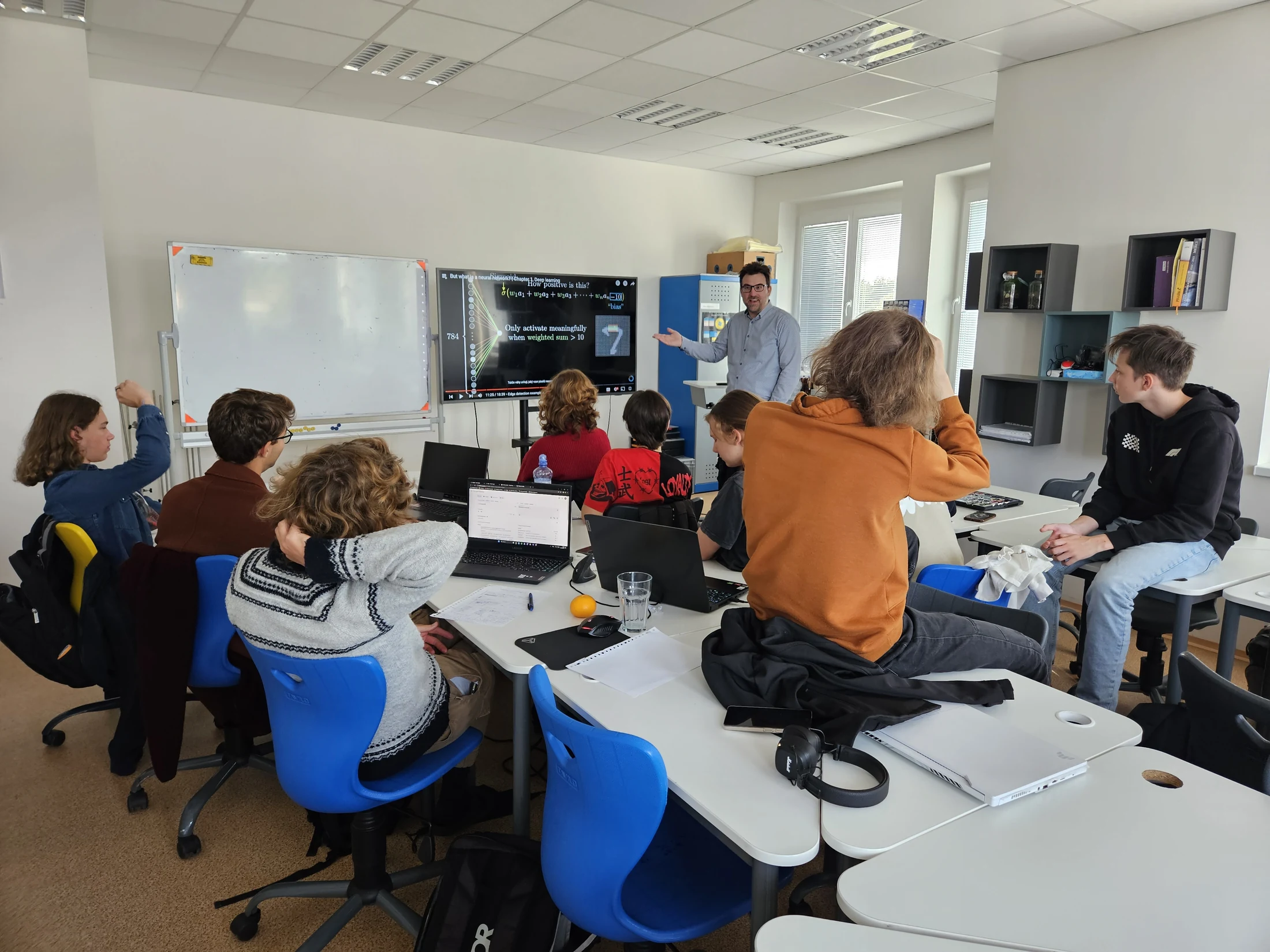
Photo placeholder
ADVANCED electives and student projects
From an idea to your own product.
Design and build your own software project with guidance from industry professionals. Work through idea validation and solution design, prototyping and development, then documentation, presentation and defending your results.
Modern web applications.
React, TypeScript, advanced CSS, Git, UX and AI-assisted programming. Take your own project from design through to deployment.
Understand an attack to design a defence.
System security, OSINT, forensic analysis, privacy and anonymity. At a higher level: ethical hacking, technical analysis and CTF challenges.
What really happens inside a program.
Data structures, algorithms, time and space complexity, recursion, trees, graphs, language processing and data compression.
When software meets the physical world.
Electronics, sensors, microcontrollers and designing your own device. A project can combine hardware, software, physical construction and a user application.
From mathematics to your own neural network.
Linear algebra, vectors, matrices and differential calculus – leading up to programming your own simple neural network to recognise handwritten digits.
Photos and videos
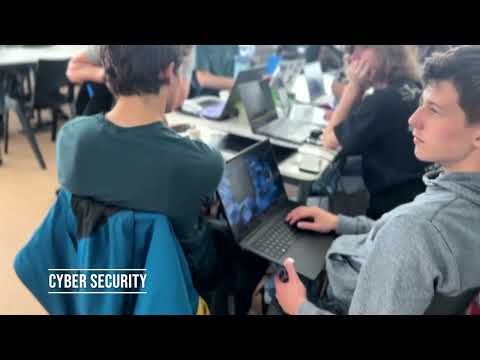
Photo placeholder
An IT project and app development

You might become a programmer. You might study medicine, natural sciences, economics or something entirely different.
Technology is very likely to be part of your work whatever path you choose.
BASE
That is why you will gain a solid foundation in technology at ITG.
ADVANCED
And if you discover that technology is your path, you will have the opportunity to go much further.